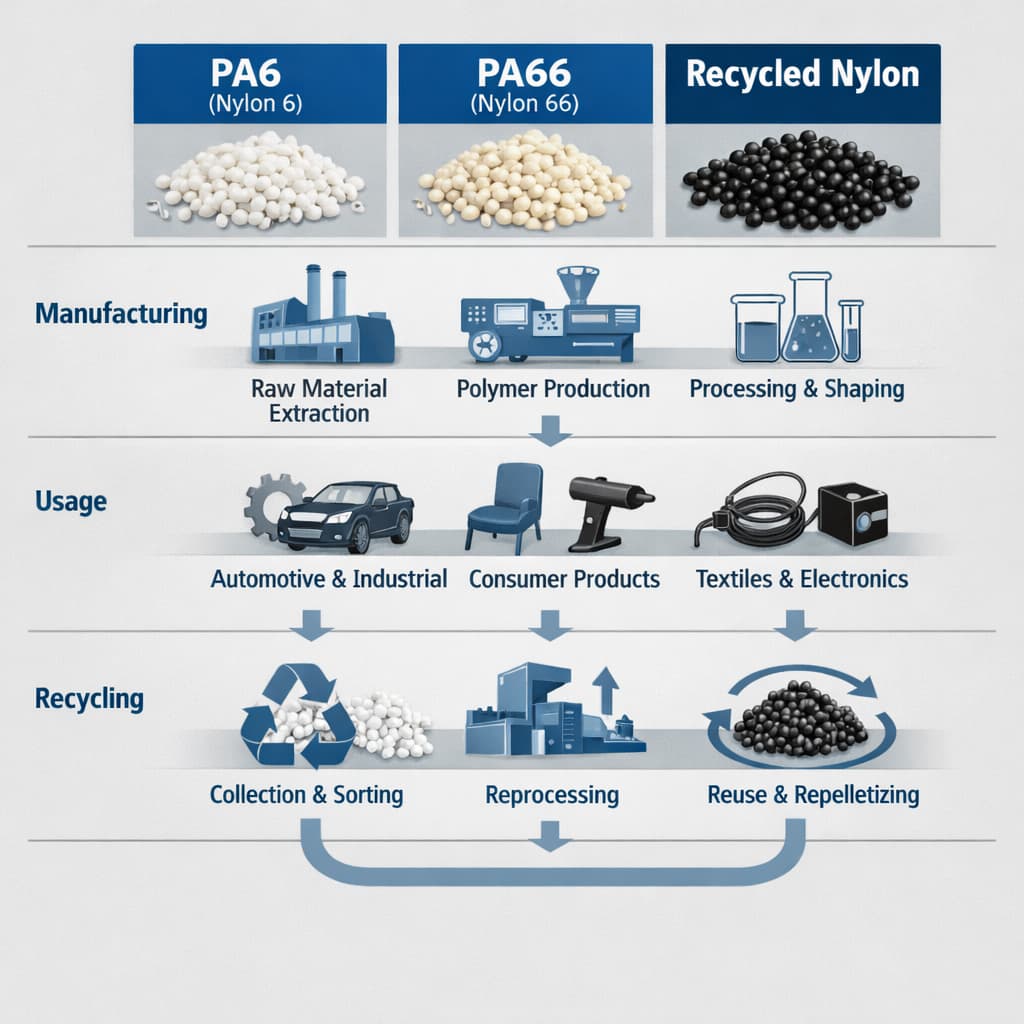
При выборе инженерных материалов многие компании по-прежнему в значительной степени полагаются на удельную цену сырья как на основной показатель ценового преимущества. Однако в реальных производственных условиях...Стоимость полимерного материала нельзя оценивать исключительно на основе его покупной цены. Для полиамидные материалы В частности, на общую стоимость влияют многочисленные факторы, включая эффективность обработки, износ пресс-форм, время цикла, долговечность изделия и потенциал утилизации по окончании срока службы.
Ввиду этих переменных, инженерные группы в таких отраслях, как электромобили, бытовая техника и промышленное оборудование, все чаще используют модели оценки стоимости жизненного цикла при сравнении материалов PA6, PA66 и переработанного нейлона.
В практических производственных условиях, Наиболее заметная разница между PA6 и PA66 проявляется в процессе обработки и при определении термических характеристик. Полиамид PA6, как правило, обладает более низкой температурой плавления и лучшими характеристиками текучести расплава. Эти свойства делают его подходящим для сложных геометрических форм или тонкостенных компонентов, изготовленных методом литья под давлением. На линиях крупносерийного производства корпусов электроники или компонентов бытовой техники PA6 часто позволяет снизить давление впрыска и ускорить заполнение полости. В результате цикл литья под давлением может быть сокращен, что повышает общую производительность.
ПА66, С другой стороны, он обеспечивает более высокую термостойкость и превосходную механическую жесткость. Компоненты, работающие вблизи систем электропривода или подверженные постоянным термическим нагрузкам, обычно выигрывают от этих свойств. В конструкционных компонентах, которые должны сохранять стабильность размеров при температурах, приближающихся к 120 °C, PA66 часто демонстрирует лучшую долговременную надежность.
С точки зрения молекулярной структуры, разница между PA6 и PA66 объясняется расположением водородных связей и особенностями кристалличности. PA66, как правило, образует более упорядоченную молекулярную структуру с более сильными водородными связями. Это обычно приводит к более высокой кристалличности, что способствует повышению жесткости, более высокой температуре деформации при нагреве и лучшей устойчивости к длительному термическому старению.
Однако это структурное преимущество также влечет за собой определенные компромиссы. PA66 требует более высоких температур обработки и, как правило, потребляет больше энергии при литье под давлением. В условиях крупномасштабного производства эти различия влияют на энергопотребление оборудования, время охлаждения и продолжительность цикла формования.