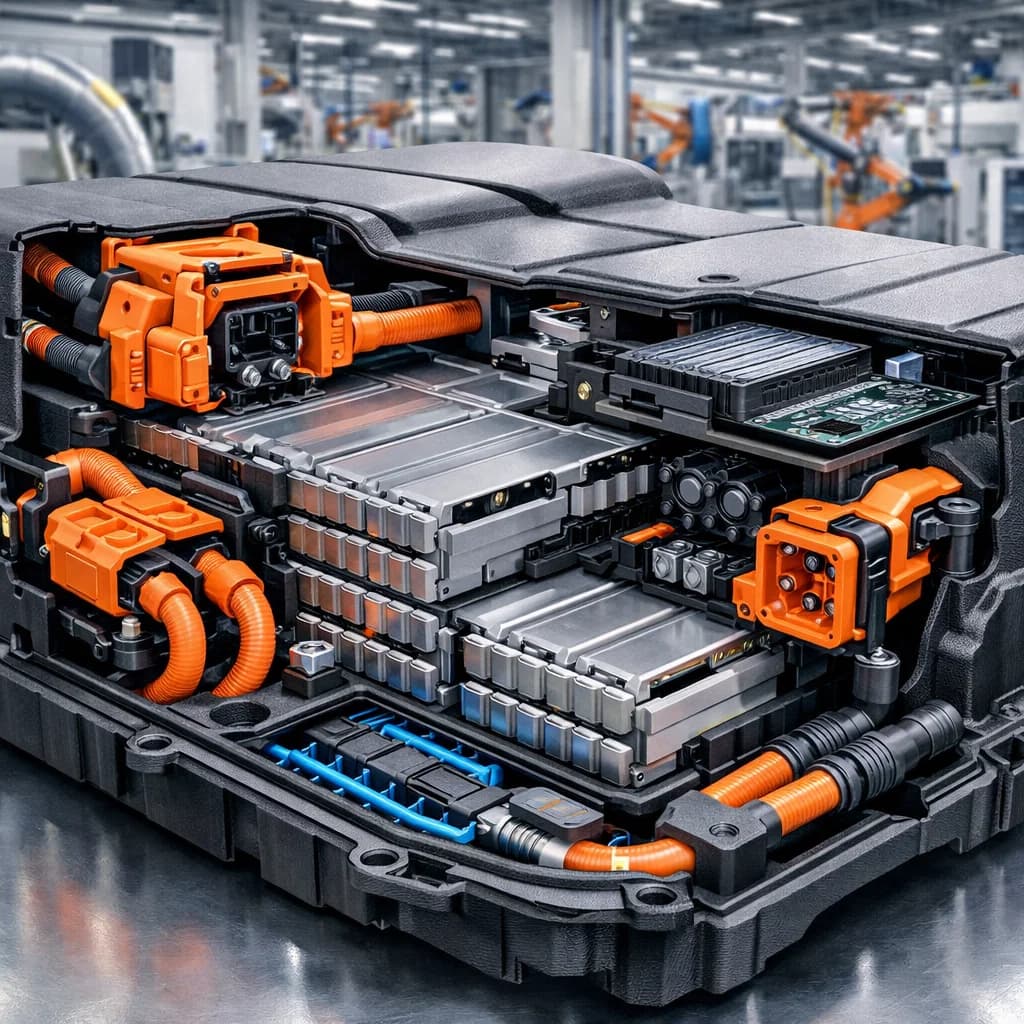

В практической инженерной проверке усовершенствования в разработке рецептур могут привести к измеримым повышениям надежности. Например, обычный соединения PA66 GF30 Как правило, прочность на изгиб сохраняется на уровне около 60 процентов после старения в условиях 85°C и 85-процентной относительной влажности. Благодаря оптимизированной обработке границы раздела волокно-матрица и улучшенным пакетам стабилизаторов, некоторые модифицированные составы могут увеличить сохранение прочности до более чем 75 процентов в тех же условиях.
Эта разница становится существенной, когда от компонентов ожидается длительная вибрация и термические нагрузки в автомобильных платформах. Аналогичные улучшения наблюдались в корпусах высоковольтных разъемов, конструкциях зарядных модулей и компонентах поддержки аккумуляторных батарей.
Еще одним важным изменением в валидации материалов для электромобилей является переход от изолированного тестирования производительности к оценке надежности системы. Производители автомобилей все чаще требуют проведения долговременных испытаний на термическое старение, испытаний на устойчивость к напряжению и испытаний на химическую совместимость, прежде чем утверждать инженерные материалы для производственных программ.
Расширенные процедуры проверки означают, что при принятии решений о составе материалов необходимо учитывать потенциальные режимы отказов на гораздо более ранних этапах разработки. Ожидание до заключительной фазы тестирования для изменения свойств материала уже недостаточно для многих применений в электромобилях.
В перспективе ряд направлений разработки рецептур приобретает все большее значение для полиамидные соединения Используется в электромобилях. Системы с низким уровнем коррозии и огнезащитой приобретают все большее значение в высоковольтных электрических средах. Низкоуглеродистые материалы, включая переработанный нейлон и биоразлагаемое сырье, постепенно входят в цепочки поставок автомобильной промышленности. Стабилизирующие пакеты, разработанные для влажных и термических сред, становятся критически важными для компонентов, расположенных рядом с батареями. Кроме того, улучшенная стабильность электрической изоляции достигается за счет лучшего контроля ионных примесей и оптимизированных интерфейсов наполнителя.
Эти изменения не заменят сразу все традиционные нейлоновые составы. Однако компании, которые начнут корректировать свои стратегии разработки материалов на ранних этапах, будут лучше подготовлены к адаптации к меняющимся нормативным и инженерным требованиям.
В долгосрочной перспективе конкурентоспособность конструкционных пластмасс для электромобилей будет зависеть не столько от одного параметра производительности, сколько от способности... Обеспечить баланс между соблюдением нормативных требований, механической надежностью и стабильностью цепочки поставок.