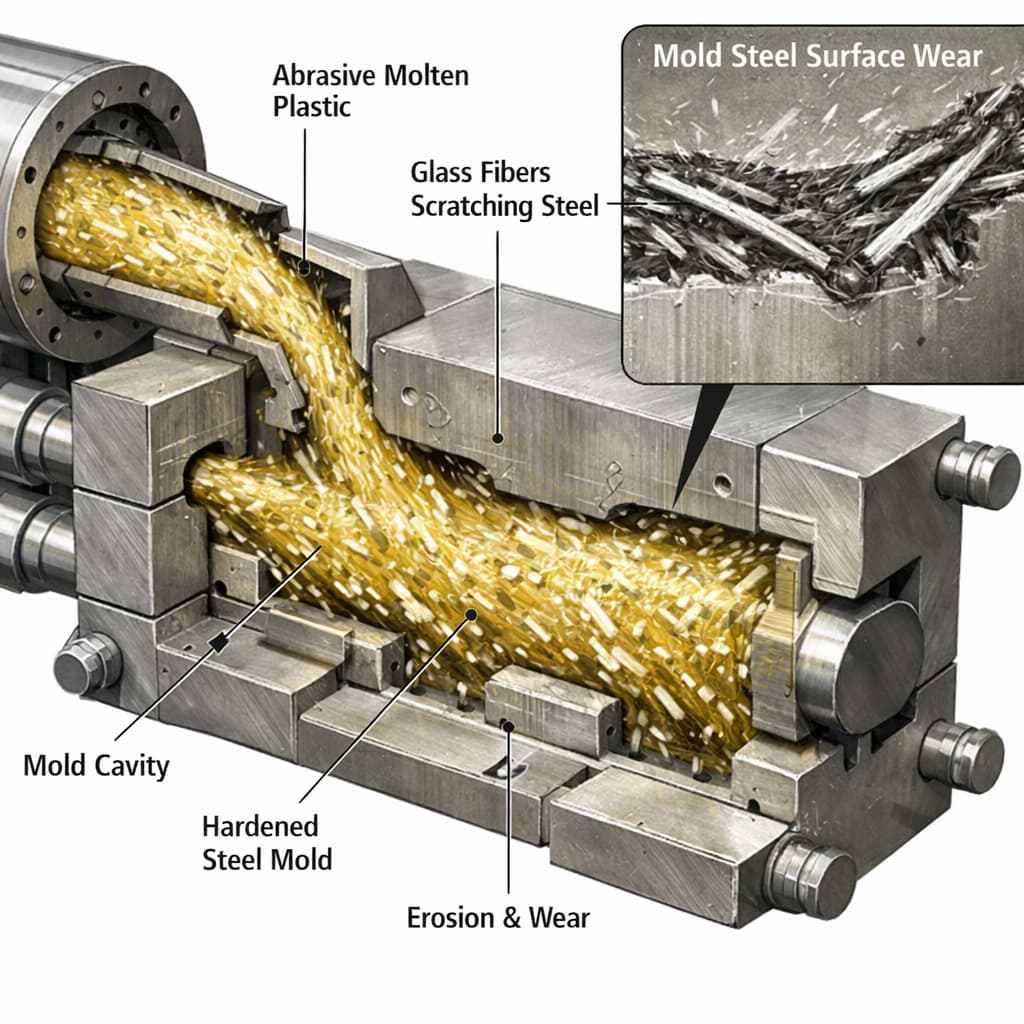
Данные технологического процесса показывают, что при одинаковых условиях обработки и использования оснастки PA66 GF40 скорость износа пресс-формы составляет 1,6.–в 1,8 раза выше чем GF30, особенно в регионах с высоким уровнем водыКроме того, системы с высоким содержанием стекловолокна требуют более высокого давления и скорости впрыска, что еще больше усиливает абразивный эффект.
Помимо механического истирания, Чрезмерное армирование также ускоряет термическую усталость пресс-форм. Сниженная равномерность термического воздействия приводит к увеличению температурных градиентов за цикл формования, что повышает риск образования микротрещин, особенно в стандартных инструментальных сталях H13 или P20.
Производственный опыт показывает, что многие отказы возникают не из-за недостаточной прочности материала, а из-за чрезмерная зависимость от высокого содержания стекловолокна. В одном из вариантов применения разъема увеличение содержания волокна с GF35 до GF50 Сокращение срока службы пресс-формы с ожидаемых 800 000 циклов до менее чем 300 000 циклов, что привело к увеличению скрытых производственных затрат более чем на 20%.
В конечном счете, выбор содержания стекловолокна — это баланс между структурными характеристиками, стабильностью процесса и экономической эффективностью производства, а не стремление к максимальной армирующей способности.eмент.