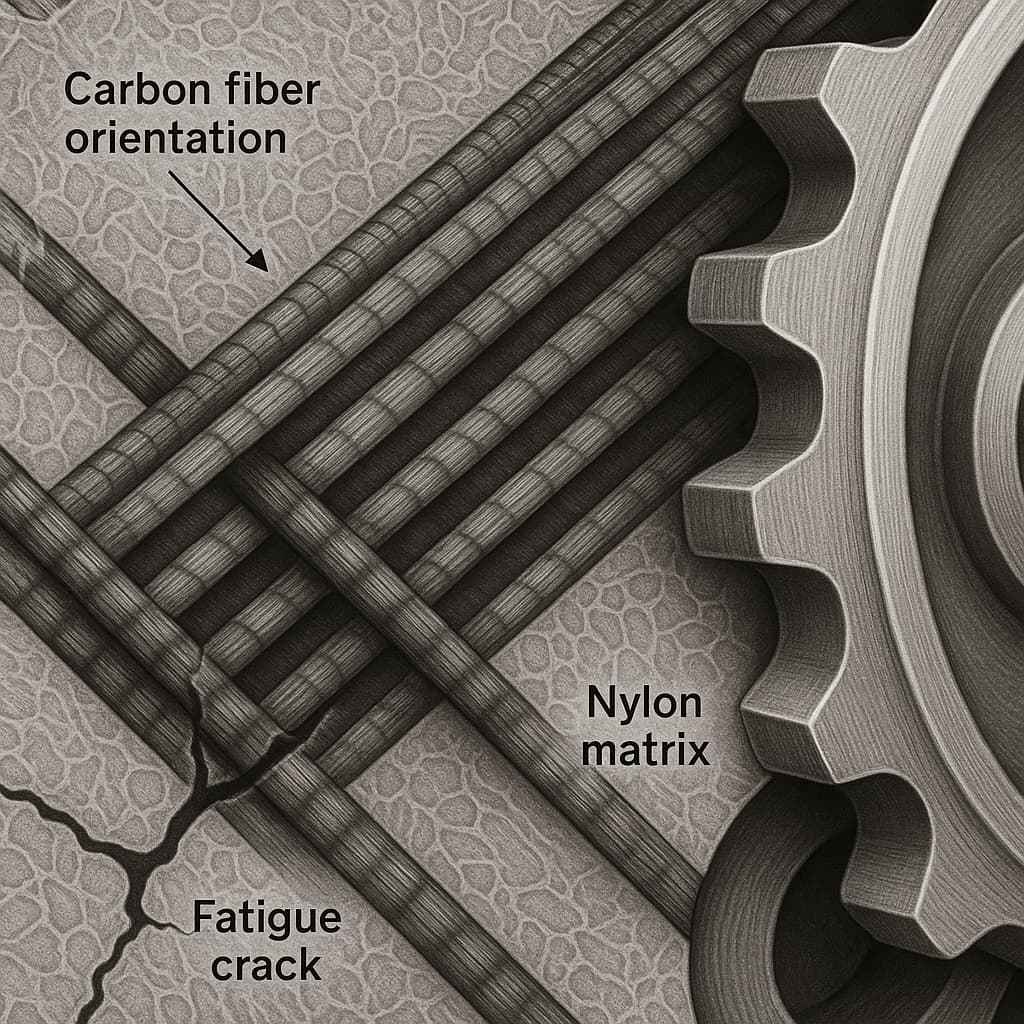

Нейлон, армированный углеродным волокном Благодаря своим свойствам, он стал важным легким конструкционным материалом. высокая удельная прочность, жесткость и хорошая технологичность.Поскольку механические системы все больше ориентируются на облегченные конструкции, точная оценка усталостной долговечности этого композита в сложных условиях нагружения имеет важное значение. Классические теории усталости металлов не в полной мере применимы к полимерным композитам, поэтому необходимо разработать специальные методики.
Оценка усталостной прочности начинается с понимания микроструктуры композита. Ориентация волокон, их распределение и межфазная адгезия существенно влияют на передачу нагрузки. При циклических нагрузках углеродные волокна несут большую часть растягивающих и изгибающих напряжений, в то время как нейлоновая матрица обеспечивает прочность и замедляет распространение трещин. Методы микроструктурной характеризации, такие как СЭМ и микрокомпьютерная томография, помогают анализировать закономерности ориентации волокон и их влияние на усталостное поведение.
На практике широко используется метод испытания кривой SN с контролем напряжения. Поскольку нейлон чувствителен к влаге и температуре, образцы необходимо предварительно подготовить перед испытанием. Однако, нейлон, армированный углеродным волокном демонстрирует множественные механизмы повреждения — разрыв волокон, отслоение на границе раздела и пластическую деформацию матрицы, — что ограничивает прогностическую способность одних только кривых SN.
Поэтому модели роста трещин, основанные на механике разрушения, применяются все чаще. Измерение скорости роста усталостных трещин при различных коэффициентах интенсивности напряжений помогает создать модель ΔK–da/dN, отражающую реальное поведение распространения трещин. Конечно-элементное моделирование с учетом ориентации волокон и сложной геометрии дополнительно повышает точность прогнозирования.
В таких областях применения, как зубчатые передачи, шкивы, кронштейны и муфты, необходимо учитывать дополнительные факторы, включая контактные напряжения, смазку и нагрев от трения. Реалистичные условия испытаний помогают преодолеть разрыв между результатами лабораторных исследований и эксплуатационными характеристиками в полевых условиях.
Комплексная оценка, сочетающая микроструктурный анализ, испытания на сверхпроводимость, моделирование роста трещин и численное моделирование, обеспечивает наиболее надежное прогнозирование срока службы.