
Supply Chain Reliability and Quality Assurance for Certified PA66 GF30 Natural Color In Stock
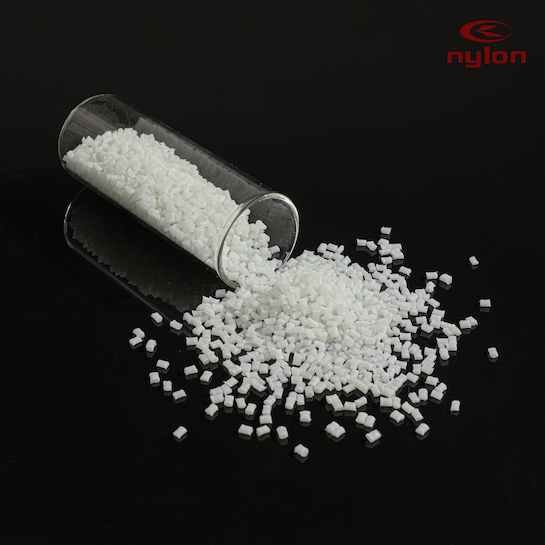
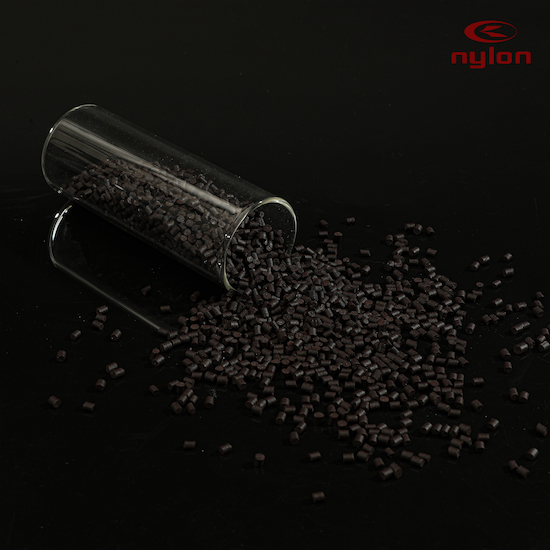
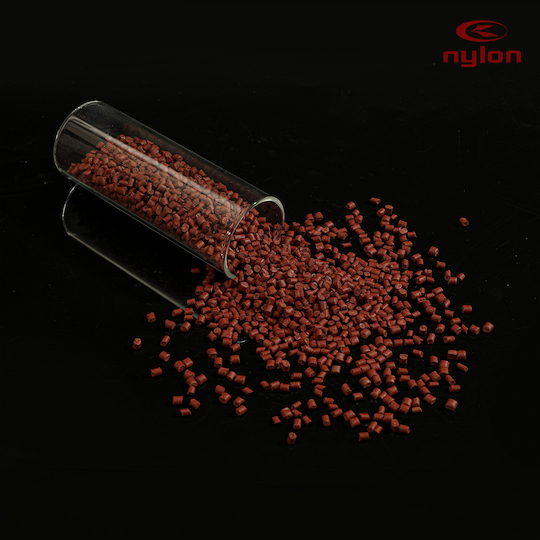
The global engineering plastics market experiences ongoing supply chain disruptions, mainly driven by price swings and supply bottlenecks of essential chemical feedstocks. Global polymer manufacturers and component molders constantly deal with unpredictable lead times and quality variances that stall production lines. Obtaining a consistent supply of Certified PA66 GF30 Natural Color In Stock has therefore become a critical operational priority for automotive, industrial, and electrical equipment manufacturers. To maintain unbroken manufacturing schedules, companies are actively seeking reliable supply partners who can provide certified materials backed by stringent batch testing and immediate inventory availability.
Understanding the current market dynamics requires examining the upstream chemical precursors that form polyamide resins. Polyamide 66 relies heavily on the production of Adiponitrile (ADN) and Hexamethylenediamine (HMDA). Because the global production capacity of ADN remains concentrated among a small number of major chemical suppliers, any unexpected plant shutdown, environmental restraint, or force majeure event severely disrupts the entire supply chain. Consequently, shortages of ADN directly restrict HMDA output, triggering rapid price spikes and severe lead-time expansions for virgin polyamide 66 base resins.
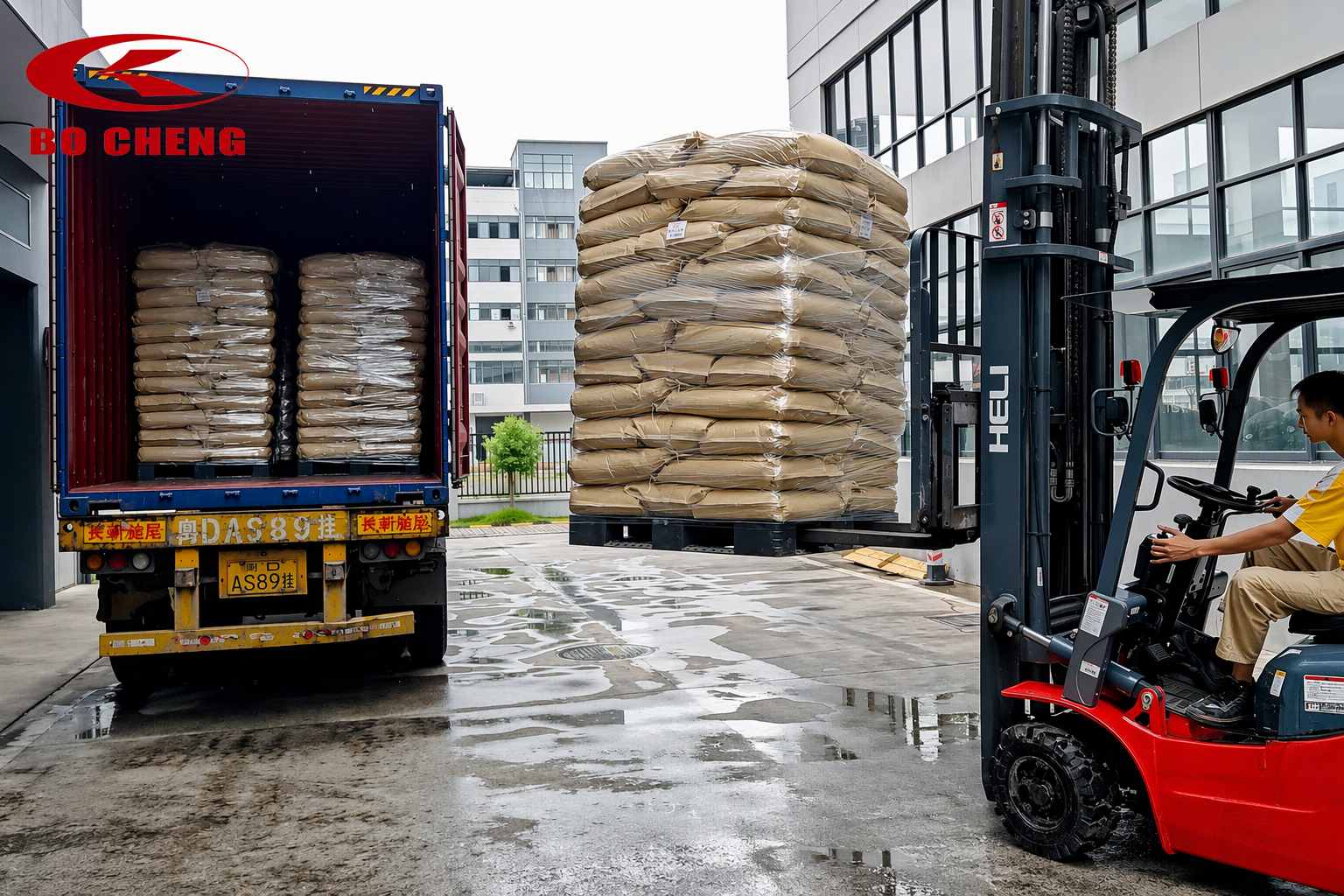
These upstream fluctuations create significant operational hurdles for downstream processors. Molders often face sudden order cancellations, extended procurement delays, or uneven resin quality when forced to switch sources under tight deadlines. To mitigate these risks, BOCHENG (Xiamen Bocheng Plastic Materials Co., Ltd.) maintains strategic inventory buffers of high-grade virgin resins. By keeping pre-certified materials ready for dispatch, BOCHENG effectively insulates downstream manufacturers from raw material volatility and ensures continuous production continuity.
Beyond precursor shortages, conventional procurement models present additional hurdles for medium and large-scale manufacturing enterprises. Traditional resin suppliers typically enforce high minimum order quantities (MOQ) alongside long production lead times that stretch over several weeks. When engineering designs change unexpectedly or production schedules scale up rapidly, these rigid terms hinder market responsiveness and tie up crucial working capital in excessive inventory.
A flexible inventory strategy addresses these operational constraints directly. Keeping verified stocks ready for rapid fulfillment allows manufacturers to shorten order-to-delivery cycles from several weeks to just a few days. Furthermore, offering flexible order volumes enables processors to align resin purchases precisely with actual production runs. Xiamen Bocheng Plastic Materials Co., Ltd. integrates strategic safety stock management with responsive logistics channels. This operational framework allows client plants to prevent costly downtime, optimize warehouse inventory levels, and adapt quickly to fluctuating market demands without incurring extra financial burdens.
While securing material on time is vital, maintaining consistent structural performance across successive batches is equally critical. Low-cost or uncertified polyamide compounds frequently exhibit batch-to-batch inconsistencies, leading to warping, sink marks, or premature mechanical failure during final assembly. High-precision molding requires rigorous, multi-dimensional quality verification before any raw material enters the production machine.
Batch testing relies on several key laboratory evaluations to verify material integrity:
Melt Flow Index (MFI): Testing fluid viscosity ensures optimal melt flow behavior inside complex injection molds. Stable flow behavior prevents incomplete mold filling or excessive flash.
Ash Content Testing: Precision burn-off tests confirm exact 30% glass fiber loading and uniform dispersion. Proper fiber reinforcement guarantees balanced mechanical strength throughout the component.
Moisture Content Analysis: Polymerized nylon absorbs atmospheric moisture rapidly. Measuring moisture levels prevents hydrolytic degradation, void formation, and surface splay marks during processing.
Tensile and Flexural Testing: Physical stress tests verify ultimate tensile strength and flexural modulus. These evaluations ensure that parts meet demanding load-bearing requirements under continuous mechanical stress.
BOCHENG implements systematic lot-to-lot testing protocols within its quality control facilities. Every dispatched batch carries a comprehensive Certificate of Analysis (COA) confirming adherence to precise technical parameters. This strict analytical protocol guarantees that each shipment delivers uniform processing characteristics and repeatable mechanical performance.
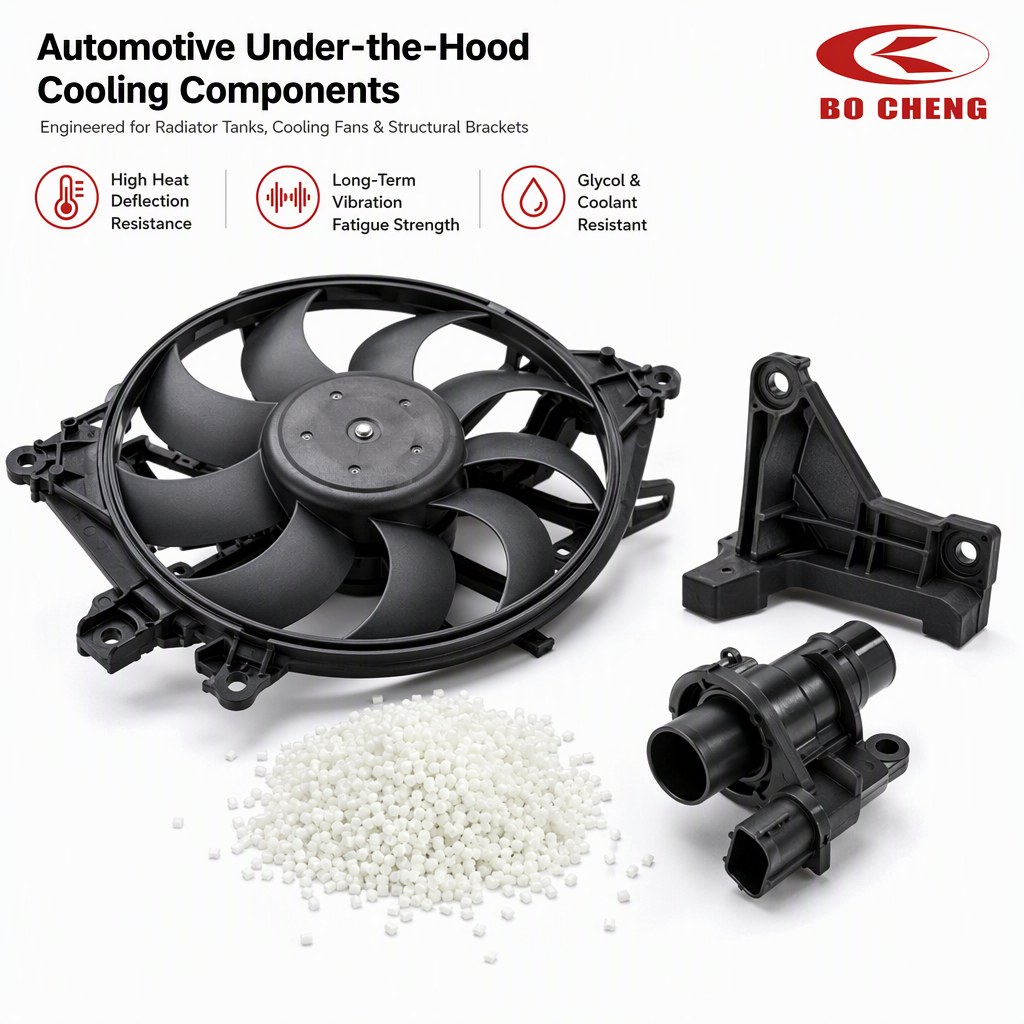
Evaluating raw material costs purely on initial purchase price often leads to hidden long-term operational expenses. A comprehensive Total Cost of Ownership (TCO) calculation considers processing efficiency, scrap rates, tool wear, and field performance risks. Engineers frequently evaluate trade-offs between different engineering thermoplastics, such as analyzing a PA6 GF30 vs PA66 GF30 material selection matrix to determine the best match for specific thermal and mechanical demands.
Polyamide 66 reinforced with 30% glass fiber offers superior Heat Deflection Temperature (HDT) and lower moisture absorption compared to standard Polyamide 6 compounds. Although Polyamide 6 provides upfront material savings, Polyamide 66 retains superior dimensional stability and mechanical strength in demanding environments. Conversely, unverified recycled or post-consumer nylon resins often carry hidden costs, such as higher scrap rates, unpredictable degradation, and accelerated mold wear due to foreign contaminants. Balancing upfront resin expenditure against long-term operational reliability allows manufacturers to achieve optimal lifetime economic efficiency.
Navigating global supply chain uncertainties requires partnering with reliable engineering material specialists. BOCHENG leverages over 16 years of specialized polymer compounding experience to deliver dependable material solutions across international markets. By integrating raw material sourcing, advanced formulation development, and rigorous batch quality assurance, the enterprise provides manufacturers with stable material foundations for critical applications.
All certified materials adhere strictly to international compliance standards, including UL94 flammability ratings, ISO management systems, and RoHS/REACH environmental directives. Combined with ready-to-ship warehouse inventory and flexible supply arrangements, BOCHENG helps global clients safeguard their production continuity against market volatility. Engineering teams and procurement specialists can readily obtain comprehensive Technical Data Sheets (TDS), safety compliance documentation, and evaluation sample kits to validate material performance directly on their production lines.
Official Website: https://www.pa6-pa66.com/