
Стекловолокно против нейлона, армированного углеродным волокном: комплексный компромисс между стоимостью, прочностью и весом 01
Выбор между стекловолокном (GF) и модифицированный нейлон, армированный углеродным волокном (УВ). В конечном итоге это тактический компромисс между Механические требования и стоимость компонентов за весь срок их службы. Инженеры и специалисты по закупкам постоянно сталкиваются с противоречиями: Максимальная механическая прочность при одновременном достижении целевого снижения веса без превышения пределов себестоимости единицы продукции. Стекловолокно (GF) и углеродное волокно (CF), являясь основными армирующими материалами для полиамидов, обладают уникальными микроструктурными механическими свойствами, определяющими конечные макроскопические характеристики. Стекловолокно остается предпочтительным выбором для конструкционных компонентов благодаря высокой экономической эффективности и надежному увеличению прочности. В свою очередь, углеродное волокно обеспечивает чрезвычайно высокую удельную прочность, низкую плотность и уникальные трибологические и электростатические свойства, что делает его незаменимым для высокотехнологичных применений, связанных с облегчением веса и точностью. Выбор оптимального материала требует сопоставления механических параметров с эксплуатационным напряжением, условиями окружающей среды и общими производственными затратами.
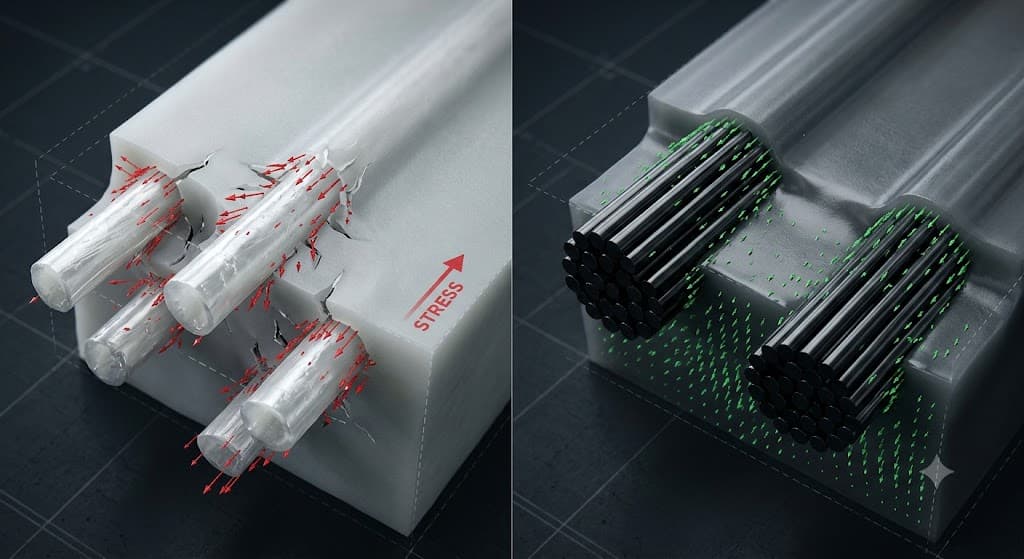
С микроструктурной точки зрения, GF и CF модифицируют нейлоновые матрицы посредством различных механических интерфейсов. Стекловолокно повышает модуль упругости при растяжении и изгибе за счет передачи касательного напряжения на границе раздела фаз. Стандартный PA66, армированный 30% стекловолокном, повышает прочность на растяжение до 160–180 МПа, значительно улучшая при этом сопротивление ползучести и температуру деформации под нагрузкой. Однако плотность исходного стекла (~2,54 г/см³) увеличивает плотность композита до 1,35–1,45 г/см³, что приводит к появлению нежелательной массы в критически важных по весу узлах. В отличие от этого, углеродное волокно (Плотность волокон ~1,75–1,80 г/см³) обеспечивает меньший вес готового компаунда (1,25–1,35 г/см³). Что особенно важно, углеродное волокно обеспечивает превосходный удельный модуль упругости: PA66, армированный 30% углеродным волокном, регулярно превышает предел прочности на растяжение 220–250 МПа, а модуль упругости при изгибе в 1,5 раза выше, чем у аналогов из стекловолокна. Такие характеристики позволяют уменьшить толщину стенок, что обеспечивает кумулятивный эффект снижения веса за счет сочетания уменьшения плотности материала и геометрической оптимизации.