Обязательно ли высокоэффективные нейлоновые материалы дороги? Соотношение стоимости материалов и эксплуатационных характеристик с точки зрения затрат на устранение дефектов. 1
При выборе материалов цена за единицу продукции часто является первым рассматриваемым параметром. Команды по закупкам, как правило, отдают приоритет более дешевым маркам полиамида, в то время как инженерные команды сосредотачиваются на запасе прочности. Однако это кажущееся противоречие часто вводит в заблуждение, поскольку стоимость материалов составляет лишь часть общей стоимости системы, в то время как затраты, связанные с отказами, остаются в значительной степени недооцененными.
Типичный инженерный сценарий можно наблюдать в соединителях или конструктивных элементах. Стандарт ПА6 Детали могут соответствовать первоначальным механическим требованиям, но в условиях длительной эксплуатации, особенно во влажной среде, поглощение влаги приводит к изменению размеров, нестабильности контактов и проблемам при сборке. Разница в стоимости материала на одну деталь может быть минимальной, однако последующие затраты, связанные с отказом, включая доработку или возврат на место эксплуатации, могут быть значительно выше.
Высокоэффективные полиамиды, как правило, обладают улучшенной термостойкостью, стабильностью размеров и усталостной прочностью. Например, ПА66 Он демонстрирует более высокую температуру деформации при нагреве по сравнению с PA6, а армирование стекловолокном или минералами повышает жесткость и сопротивление ползучести. Однако эти улучшения также приводят к увеличению стоимости материалов и обработки. Критический вопрос заключается не в том, становится ли материал дороже, а в том, снижает ли он риск на системном уровне.
В автомобильной промышленности широко распространено инженерное наблюдение: стоимость материалов часто составляет менее 10% от общей стоимости жизненного цикла компонента, в то время как затраты, связанные с отказами, — включая техническое обслуживание, простои и ущерб репутации, — могут превышать 50%. В таких условиях выбор более эффективного полиамида становится стратегией контроля затрат, а не бременем расходов.
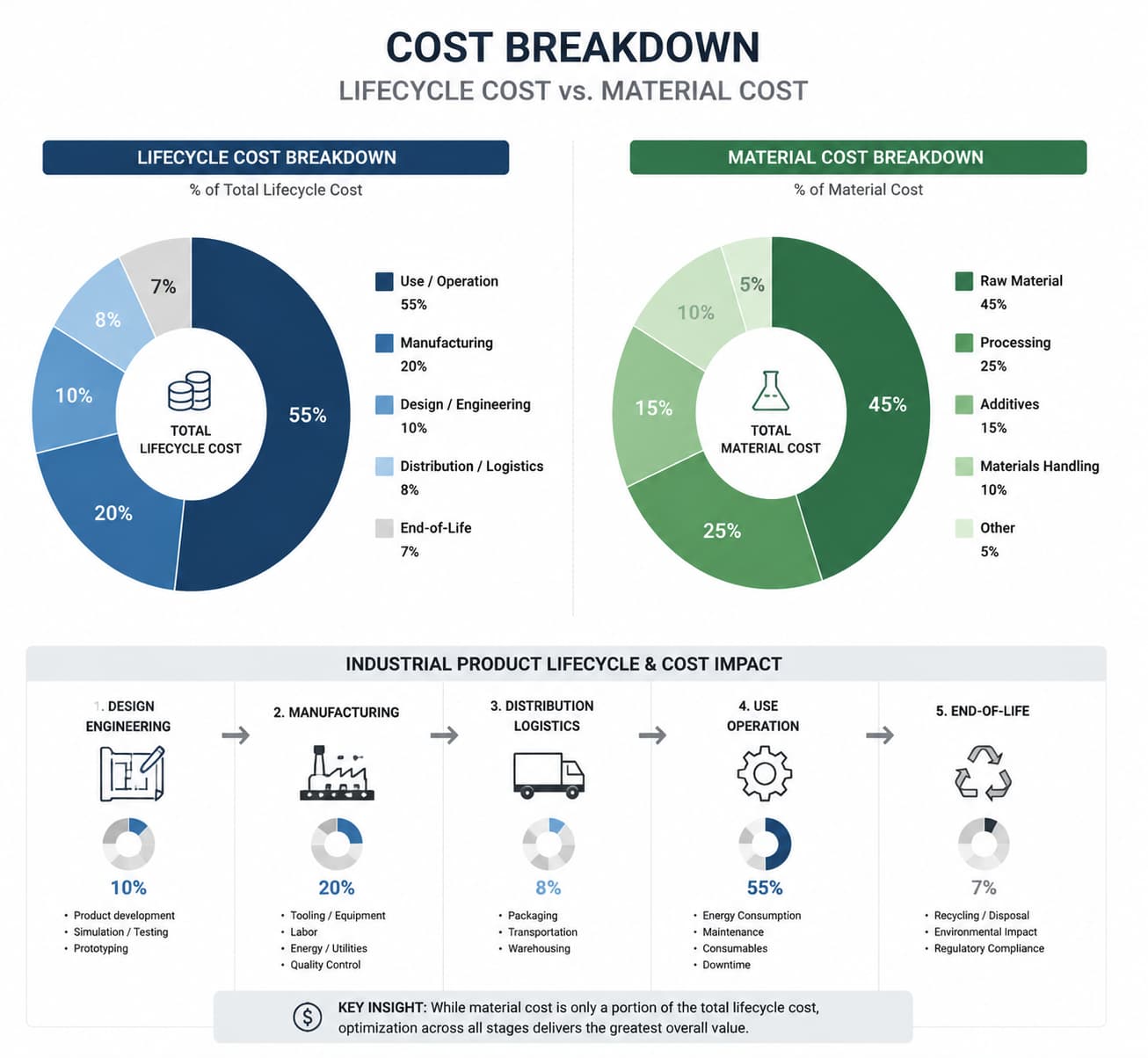
С точки зрения данных, механическая деградация PA6 становится значительной при температурах выше 120 °C, в то время как PA66 или высокотемпературные полиамиды, такие как PPA, сохраняют более стабильные характеристики. При использовании более дешевого материала требуются компенсирующие конструктивные меры, такие как увеличение толщины стенок или усиление конструкции, что накладывает дополнительные ограничения по весу и занимаемому пространству.